
Water heaters tend to fail at the worst possible time — usually on a busy morning, or while you're away and the tank quietly empties onto the garage floor. In Cathedral City, hard water and extreme summer garage temperatures add stress that can shorten a heater's life. The good news is that most water heaters give warnings first. Here are the seven to watch for.
1. It's getting old
Check the serial number on the label; most manufacturers encode the manufacture date in it. Tank heaters in hard-water areas often reach the end of their service life somewhere around 8 to 12 years, depending on maintenance. Tankless heaters can last longer, but only with regular descaling. If your heater is in that age range and showing any other sign on this list, start planning ahead.
2. Popping, rumbling or banging noises
Hard water drops calcium sediment to the bottom of the tank. Water trapped beneath the sediment boils and pops as the burner or element heats it. It's a sign the heater is working harder than it should, and that the tank bottom is being overheated. A flush can help if caught early; heavy sediment in an older tank is a sign of approaching failure.
3. Rusty or discolored hot water
If only your hot water is rusty, the tank's protective anode rod may be used up and the steel tank may be corroding from the inside. If both hot and cold are discolored, the cause is more likely in your pipes (common with older galvanized plumbing).
Have this problem right now?
Call to talk with a local plumber serving Cathedral City.
4. A rotten-egg smell in hot water
This is usually a reaction between bacteria in the water and the anode rod, producing hydrogen sulfide. Replacing the anode with a different type and disinfecting the tank often solves it.
5. Running out of hot water faster
Sediment takes up space and insulates water from the heat, a broken dip tube can mix cold water into the hot outlet, and a failed lower element in an electric heater will cut capacity dramatically. All of these are repairable — but in an older tank, they're often a signal to replace.
6. Water around the base
Not every puddle is a failed tank. Check where the water is coming from:
- Relief valve discharge pipe: may indicate excess pressure or temperature, a missing or failed expansion tank, or a worn valve.
- Fittings on top: loose or corroded connections can often be repaired.
- Drain valve: may just need tightening or replacing.
- The tank body itself: means the tank has failed and must be replaced.
If the tank is leaking: turn off the cold water supply valve at the top of the heater, turn the gas control to "off" or switch off the breaker for electric units, and call a plumber.
7. Inconsistent temperature
Water that swings between hot and lukewarm can point to a failing thermostat, a burner or pilot problem, or heavy sediment. On tankless units, error codes and temperature fluctuations often mean scale buildup in the heat exchanger or a dirty inlet filter.
How desert heat affects water heaters
Many Cathedral City homes keep the water heater in the garage, where summer temperatures can exceed the outdoor high. Heat accelerates wear on gas control valves, plastic parts and electronic controls, and poor airflow in enclosed closets can affect combustion on gas units. Keep the area around the heater clear, make sure combustion air openings aren't blocked, and don't store chemicals or paint near a gas appliance.
Desert heat also explains a common summer complaint that isn't the water heater's fault: "cold" water running hot. Supply lines that run through hot attics or just below sun-baked ground warm the water before it reaches the tap. Letting it run briefly usually brings the temperature down.
Repair or replace?
| Usually worth repairing | Usually time to replace |
|---|---|
| Thermocouple or flame sensor | Leaking tank body |
| Gas control valve on a newer unit | Rusty hot water from tank corrosion |
| Heating element or thermostat | Older tank with heavy sediment |
| Relief valve, drain valve, anode rod | Multiple repairs needed at once |
What to ask about a replacement
- What size do I need for my household and fixtures?
- Gas or electric? Tank or tankless?
- Does the installation include seismic strapping (required in California), proper venting, a drain pan if needed and an expansion tank?
- Will a permit be pulled?
- What maintenance does the new heater need in hard water?
To get connected with a local plumber for water heater repair in Cathedral City, call (760) 273-8147.
Frequently asked questions
How often should I flush my water heater in Cathedral City?
Draining a few gallons every six months and doing a full flush annually is a good routine in hard-water areas.
Is it dangerous if my water heater relief valve drips?
It can indicate excessive pressure or temperature. Never cap or plug the valve — have the system checked.
Why does my cold water come out warm in summer?
Supply pipes in hot attics or shallow ground warm up in summer. It's a common Coachella Valley issue and usually not a water heater problem.
Related plumbing services

Water Heater Repair
Repair, maintenance and replacement for tank and tankless water heaters.

Leak Detection
Locate hidden slab, wall and water line leaks before they cause damage.
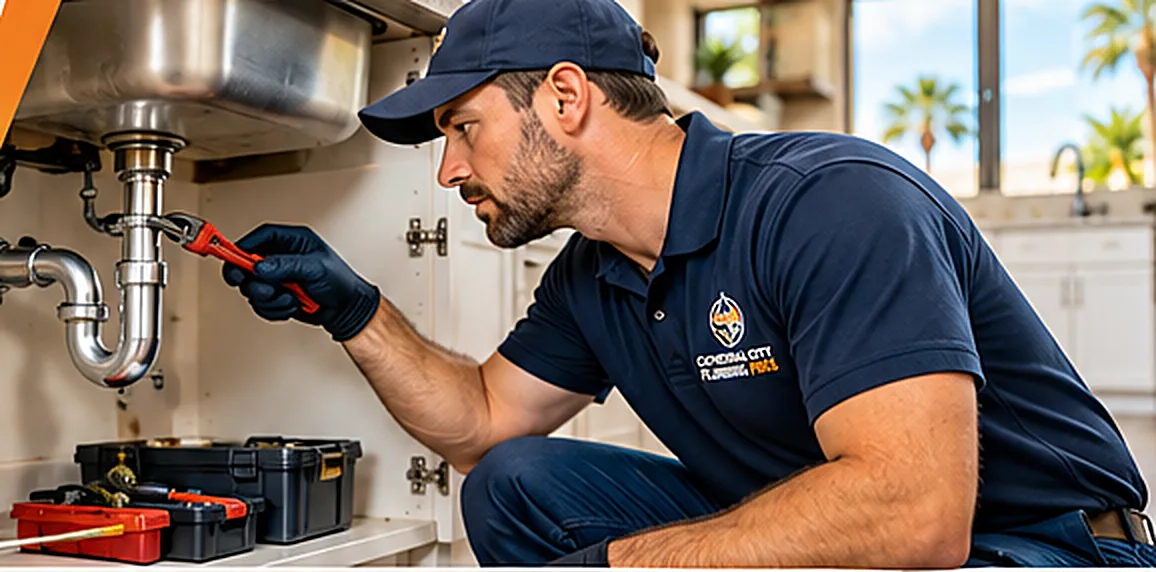
Plumbing Repair
Leaks, drips, valves, noisy pipes and everyday plumbing problems fixed right.
More plumbing guides

Hard Water in Cathedral City: How Mineral Scale Damages Your Plumbing (and What to Do About It)
Why Coachella Valley water is so hard, the damage scale does to water heaters and fixtures, and which treatment options actually help.
Read GuideSlab Leak Warning Signs Every Cathedral City Homeowner Should Know
Nearly every home in the valley sits on a slab. Here's how to spot an under-slab leak early and what your repair options are.
Read Guide
Why Your Kitchen Sink Keeps Clogging — and How to Stop It for Good
Grease, starches, disposal habits and hidden pipe problems — the real reasons kitchen drains clog over and over, and what fixes them.
Read Guide