
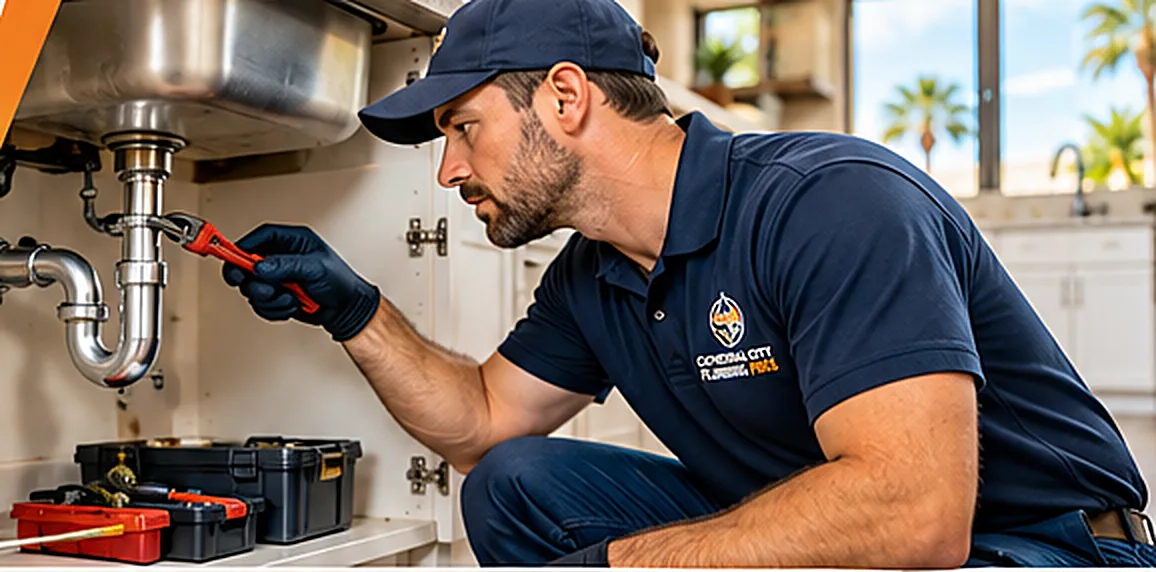
Most clogs affect a single fixture. A main sewer line clog is different: it blocks the one pipe that carries all of your home's wastewater out to the city sewer. When that line is blocked, water from every fixture has nowhere to go — and it will come back up through the lowest drain in the house. Recognizing the signs early can prevent a messy, unsanitary backup.
Signs your main sewer line is clogged
- Multiple slow drains at once, especially toilets, tubs and showers.
- Water backing up into the tub or shower when you flush a toilet.
- Gurgling toilets when the washing machine drains or a sink runs.
- Toilets that bubble or rise when other fixtures are used.
- Sewage odors from drains or around the yard.
- Water or sewage at the cleanout or around floor drains.
- Soggy spots in the yard along the sewer line path.
If sewage is backing up: stop using all water immediately — no flushing, showering, laundry or dishwasher. Keep children and pets away from contaminated areas and call a plumber.
Find your sewer cleanout
The cleanout is a capped pipe, usually 3 or 4 inches across, that gives access to the main line. In Cathedral City homes it's typically outside near the foundation on the side of the house where the bathrooms or kitchen are, or in the front yard between the house and the street. Knowing where it is helps the plumber get to work quickly. If it's buried under landscaping or covered by a patio, mention that when you call.
What causes main line clogs in Cathedral City
Grease and wipes
Kitchen grease and "flushable" wipes are the most common causes of main line blockages everywhere, including here.
Older pipe and transitions
Many Cathedral City neighborhoods were built before the city incorporated in 1981, and many of them originally relied on septic systems. Neighborhoods like the Cove and Dream Homes were converted to sewer through assessment districts in the 2000s. In homes like these, the original house drain may connect to a newer sewer lateral. Offsets, transitions between pipe materials and joints can become catch points.
Bellies and sags
If part of the line has settled, it forms a low spot where water and solids sit and build up. These cause the same clog to return repeatedly.
Roots
Tree and shrub roots seek out moisture and can enter older pipes at joints or cracks. Not every landscape poses a risk, but large, thirsty trees near the sewer path deserve attention.
Collapsed or broken pipe
Older cast iron can corrode and older clay or early plastic pipe can crack, especially under driveways.
Have this problem right now?
Call to talk with a local plumber serving Cathedral City.
A note on septic-to-sewer neighborhoods
Cathedral City is still working to convert remaining septic areas to sewer. The city, together with Coachella Valley Water District and Desert Water Agency, has been planning and designing septic-to-sewer projects for neighborhoods including Whispering Palms, South City, Lakeview Villas, the Papaya Lane and Pomegranate Lane area, and the Caliente Sands and Royal Palms mobile home parks. If your home is still on septic, backups may point to a full tank or failing drain field rather than a sewer line clog — mention your system type when you call.
What happens when a plumber clears a main line
- Access through the cleanout. The plumber opens the cleanout carefully, since backed-up water may be under pressure.
- Clear the blockage. A sewer machine with the right cutting head, or a hydro jetter, opens the line.
- Camera inspection. A video camera shows what caused the clog and whether the pipe has bellies, cracks, roots or offsets.
- Recommendations. If the pipe is sound, maintenance cleaning may be all that's needed. If it's damaged, the plumber can explain repair options.
Preventing main line clogs
- Flush only toilet paper and human waste.
- Keep grease, fats and oils out of all drains.
- Install lint traps on laundry discharge lines.
- Know where your cleanout is and keep it accessible.
- Schedule a camera inspection when buying an older home.
If several drains are acting up, call (760) 273-8147 to get connected with a local plumber for main sewer line cleaning in Cathedral City.
Frequently asked questions
Who is responsible for my sewer line?
Generally, the homeowner is responsible for the lateral from the house to the public main. Your sewer provider can confirm where the boundary is.
Can I clear a main line clog myself?
Rental sewer machines are powerful and can be dangerous, and opening a pressurized cleanout can release sewage. Most homeowners are better served by a plumber.
Should I get a camera inspection after a main line clog?
Yes, especially if it's not the first time. It shows whether the line is damaged and helps prevent repeat backups.
Related plumbing services

Drain Cleaning
Kitchen, bathroom, shower and main line drain cleaning to restore full flow.

Clogged Drain Repair
Stubborn clogs in sinks, toilets, tubs and sewer lines found and cleared.

Pipe Repair & Replacement
Burst, corroded and leaking pipes repaired, rerouted or fully replaced.
More plumbing guides

Hard Water in Cathedral City: How Mineral Scale Damages Your Plumbing (and What to Do About It)
Why Coachella Valley water is so hard, the damage scale does to water heaters and fixtures, and which treatment options actually help.
Read Guide
Slab Leak Warning Signs Every Cathedral City Homeowner Should Know
Nearly every home in the valley sits on a slab. Here's how to spot an under-slab leak early and what your repair options are.
Read GuideWhy Your Kitchen Sink Keeps Clogging — and How to Stop It for Good
Grease, starches, disposal habits and hidden pipe problems — the real reasons kitchen drains clog over and over, and what fixes them.
Read Guide